
The Drum Machines That Built Genres
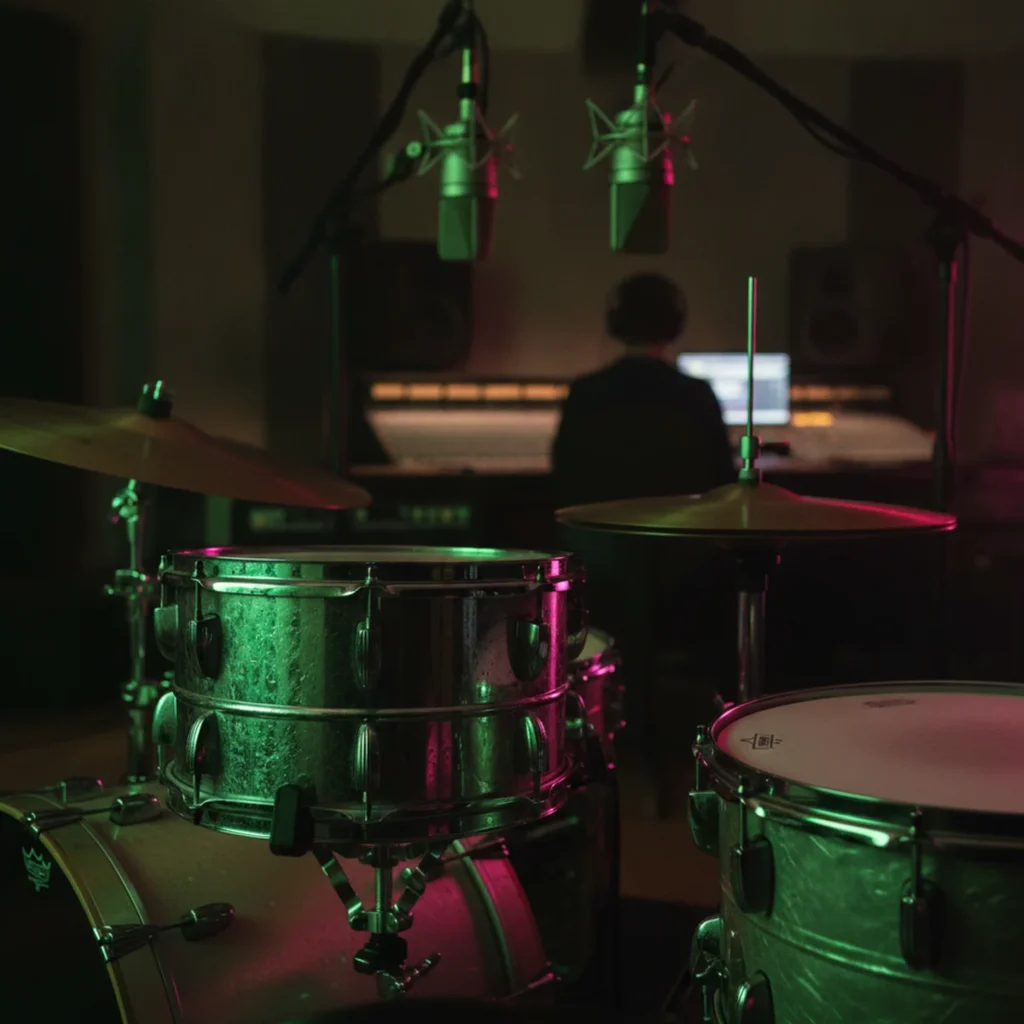
Specific machines produced specific genres, largely because of what they could not do.
Several entire genres are named after or defined by one drum machine, and in most cases the defining characteristic began as a limitation.
You can listen to our full playlist which contains the artist’s music, and know more about the artist’s work by scrolling down the page.

PLAYLIST
Genres Named After Machines
Several entire genres are named after, or defined by, a single drum machine, and in most cases the defining characteristic began as a limitation rather than a feature.
That is an unusual relationship between tools and music. Guitars did not produce genres in the same way, because guitars are general-purpose. Early drum machines each had a narrow and distinctive set of sounds that could not be changed.
When a machine can only produce a specific palette, every record made with it shares that palette, and a body of work with a common sonic signature is exactly what a genre label attaches to.
Analogue Machines Could Not Sample
The first generation generated their sounds electronically rather than replaying recordings, which is why they sound nothing like drums.
A kick was a filtered sine wave with a fast pitch envelope. A snare was noise shaped by an envelope. A hi-hat was filtered noise. These were attempts at drums that failed to be convincing and succeeded at being something else.
That failure was commercially damaging at launch, since the machines were sold as substitutes for drummers and were poor ones. It became the basis of their value once producers stopped wanting substitutes and started wanting these specific sounds.

Limitations Became Defining Features
The specific constraints of individual machines are audible in the genres built on them, and the connection is usually direct.
A machine with a resonant kick capable of very long decay produces music where that sustained low note is a structural element rather than a percussive hit. A machine with a narrow, unrealistic snare produces music that uses it as a signal rather than as a backbeat.
Step-based programming interfaces mattered too. A grid of sixteen steps encourages patterns that sit exactly on those subdivisions, which is a large part of why the resulting music is so rigidly quantised.
Cheap Second-Hand Machines Reached the Right People
The distribution mechanism matters as much as the technology, and it was essentially accidental.
These machines sold poorly at release and appeared cheaply on the second-hand market within a few years. That put them in the hands of people with limited budgets and no investment in the conventions they were failing to satisfy.
So the machines reached experimental producers in specific cities precisely because the mainstream had rejected them, and the genres that resulted are geographically concentrated for exactly that reason.

Samplers Changed the Relationship
The pattern weakened once sampling made any sound available, because the constraint that produced the coupling disappeared.
A sampler has no characteristic sound of its own. Two producers using the same sampler share nothing, so no genre attaches to the instrument. What emerged instead were genres organised around source material, technique and tempo.
That is why no genre is named after a sampler in the way several are named after drum machines. The machines that produced genres did so by being restrictive, and the tool that replaced them was defined by being unrestricted.
The Sounds Outlived the Hardware
The original machines are now expensive collectors’ items, and their sounds are more widely used than ever through samples and emulations.
That separation is worth noting: the sounds have become permanent cultural objects independent of the hardware that generated them, and most producers using them have never seen the machines.
What has not transferred is the constraint. A producer with a sample library has access to every machine simultaneously, which means the coupling between a limited palette and a coherent genre cannot happen again in the same way.


About The Author

 The FM Synth Sound and Where It Went
  Analogue and Digital, and What Actually Differs
  Why Synth-Pop Keeps Coming Back
  The Arpeggiator, and How to Hear It
  Presets Are Not Cheating
  Vocoder, Talkbox, Auto-Tune: Three Different Machines
  The Sync Pipeline for Synth Music
  What Software Emulation Gets Right
  Why Synth-Pop Does Well on Playlists
  Sidechain Is Not the Only Way to Make Space