
Presets Are Not Cheating
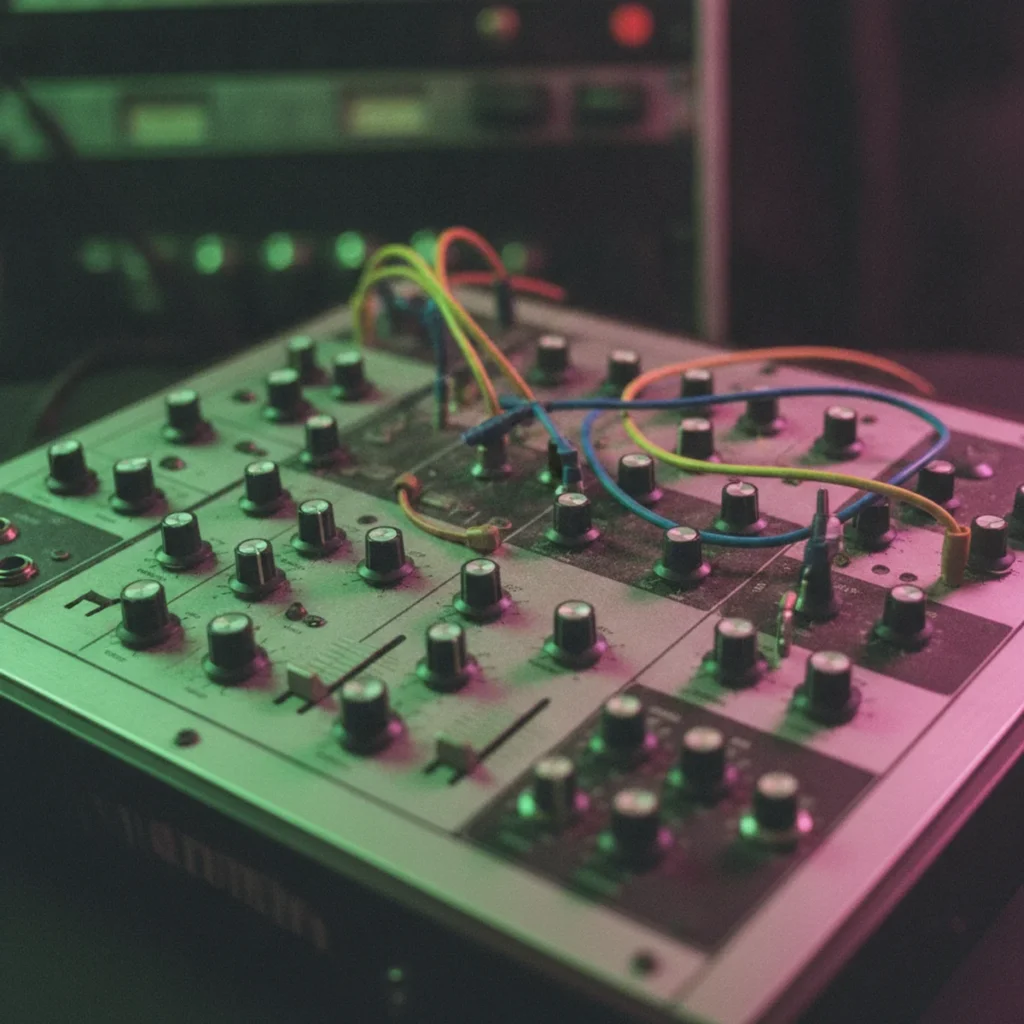
Factory sounds appear on an enormous share of the canon, and the objection misunderstands what a preset is.
The idea that using a factory preset is lazy has survived decades of evidence to the contrary, including most of the records the people making the argument admire.
You can listen to our full playlist which contains the artist’s music, and know more about the artist’s work by scrolling down the page.

PLAYLIST
The Canon Is Full of Factory Sounds
The idea that using a factory preset is lazy has survived decades of evidence against it, including most of the records the people making the argument admire.
An enormous share of the electronic pop canon uses presets essentially unmodified. The characteristic sounds of several eras are specific factory patches from widely sold instruments, recognisable precisely because so many people used them as shipped.
That is not a scandal to be uncovered. It is how the instruments were designed to be used, and the records are not diminished by it.
A Preset Is a Starting Position
The objection usually rests on treating a preset as a finished artefact that the user did not make, which misunderstands what it is.
A preset is a set of parameter values. Loading one puts the instrument in a particular state, from which every control remains available. Adjusting the filter, the envelope or the modulation from that starting point is synthesis, whether or not the starting point was chosen by someone else.
Starting from silence and building a patch parameter by parameter is a legitimate approach and it is not more authentic. It is a different route to the same object, and the instrument does not record which one was taken.

The Sound Is a Small Part of the Record
The deeper problem with the objection is that it locates a record’s value in its timbres, which is where very little of it actually sits.
A song’s melody, harmony, structure, rhythm, arrangement, performance, mix and lyric all contribute more to the outcome than whether the pad was programmed or loaded. Two producers using the same preset produce entirely different records.
Conversely, an original patch does not rescue a weak song. Time spent programming a distinctive sound for material that is not working is usually time spent avoiding the actual problem.
Where the Criticism Has a Point
There is a version of the concern that holds up, and it is about ubiquity rather than authorship.
When a particular preset becomes very widely used within a short period, records begin to sound like each other, and any individual track’s ability to stand out diminishes. That is a real commercial and artistic cost.
The remedy is not to avoid presets on principle but to avoid the specific handful that are currently saturating releases, or to modify them enough that the recognisable signature is gone. That is a judgement about context, not about method.

Presets Are Teaching Material
An underrated function of a good factory library is pedagogical, and treating presets as forbidden removes it.
Loading a patch that does something interesting and then examining how it is constructed is one of the most efficient ways to learn synthesis. The parameter values are a worked example produced by someone who understood the instrument.
Sound designers who build factory libraries are frequently the deepest experts on that instrument, and their patches encode techniques that would take a long time to discover independently.
Judge the Record
The reasonable position is that the method has no bearing on the result and should be assessed accordingly.
Nobody asks whether a guitarist designed their own pickups or a pianist voiced their own instrument. Musicians have always used tools built by specialists, and synthesis is not a special case requiring a purity that no other discipline demands.
What matters is whether the record works. If it does, the provenance of the patch is a trivia question; if it does not, an original patch will not have saved it.



About The Author

 The FM Synth Sound and Where It Went
  Analogue and Digital, and What Actually Differs
  Why Synth-Pop Keeps Coming Back
  The Arpeggiator, and How to Hear It
  Vocoder, Talkbox, Auto-Tune: Three Different Machines
  The Drum Machines That Built Genres
  The Sync Pipeline for Synth Music
  What Software Emulation Gets Right
  Why Synth-Pop Does Well on Playlists
  Sidechain Is Not the Only Way to Make Space