
BROKEN FEARS Wrote the Mind Reconstruction Soundtrack for Dancers, Starting on a Moog Grandmother
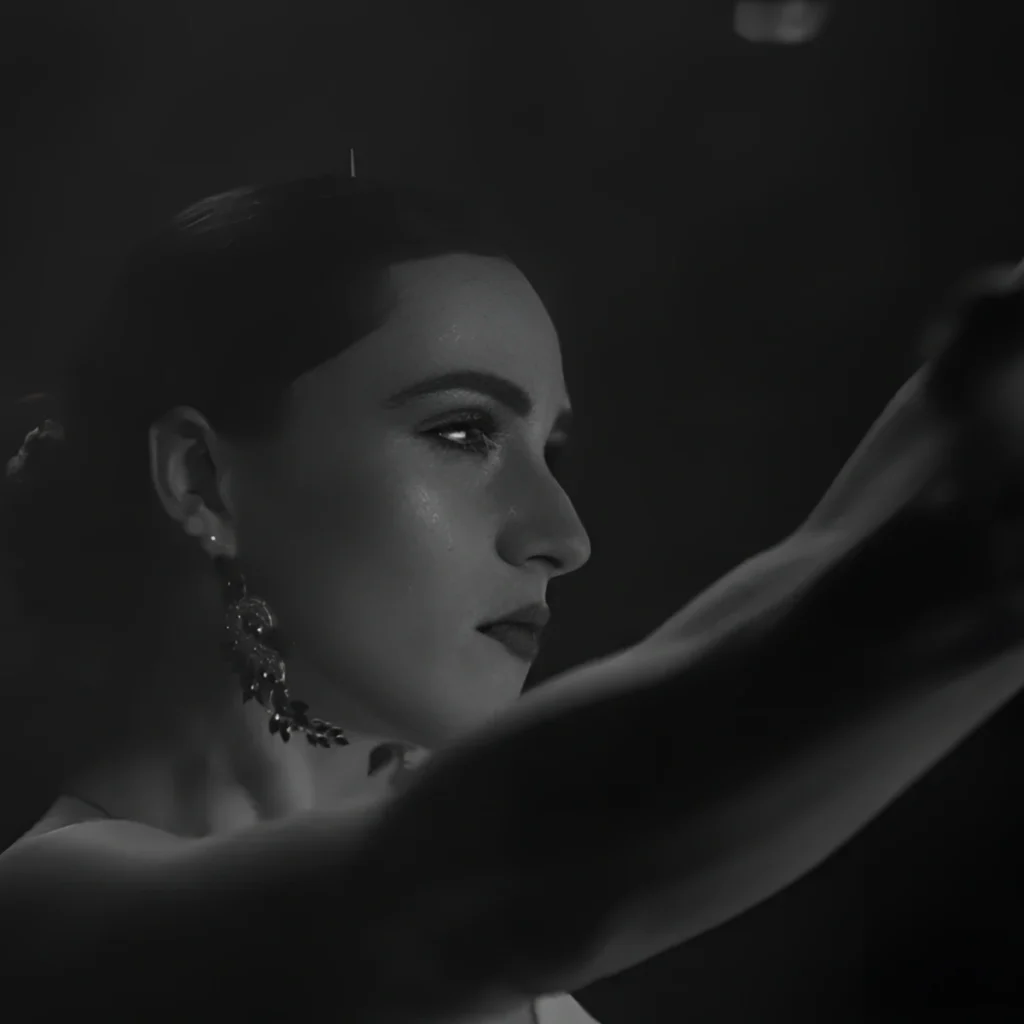
BROKEN FEARS Wrote the Mind Reconstruction Soundtrack for Dancers, Starting on a Moog Grandmother
A Berlin Composer and Dancer Builds Ten Experimental Electronic Pieces From Synth Effects and Silence
A water drop falls in the bridge of The Sensation of Meaninglessness, and it came out of a Moog Grandmother. That one sound explains how BROKEN FEARS made Mind Reconstruction (Original Motion Picture Soundtrack). The self-released, ten-track experimental electronic album came out on 13 September 2026. Its effects came first, and the pieces grew out of them.
BROKEN FEARS is in the playlist below with Dissolving from Mind Reconstruction (Original Motion Picture Soundtrack), and the BROKEN FEARS profile brings together everything written about the project. The soundtrack arrived through PopHits.Co Music Charts, the programme that verifies independent artists and places their releases across its network of music news titles. Start it playing, then read how it was built.


A Water Drop on the Moog Grandmother Is the Hook of Mind Reconstruction
BROKEN FEARS is the solo project of Kassandra Lisiane Hanisch, a Berlin-based artist. She moves between music, film, painting and performance, and she also writes film scores. Her credits include Sheldon Armstrong’s The 3rd (2023) and the director’s upcoming Mezzanine.
Still, she wrote this album for movement. She is a dancer herself. So she wanted music that leaves a dancer free to choose the feeling and the steps.
The hook, then, is a machine. Her sessions usually started on the Grandmother. There she drew out unusual effects, recorded them and cut them up. Then she moved the pieces around until one of them suggested a mood. Those fragments became the foundation of each track, and everything else sits on top of them.
On The Sensation of Meaninglessness, track six and the second-longest piece at 5:18, the sound design carries the story. First, a high tone cuts through the murk like ringing ears after a knock. Then a single piano note lands hard, a sudden jolt back into the room. Later, the Grandmother’s water drop marks out the space in the bridge.
The rest of the palette is software. Native Instruments’ Kontakt supplied piano, atmosphere and percussion through collections such as Mysteria, Piano Colors and Battery. She used them to find odd timbres more than to copy real instruments. She also fed synth recordings into Udio, an AI audio generator, and asked it for glitches, noise and whispers. Then she edited the results back into the tracks as raw material.

BROKEN FEARS Treats Every Word on Mind Reconstruction as One More Sound in the Mix
The writing follows the same method. BROKEN FEARS does not tell a story line by line. Instead, language becomes another layer of sound design. Short phrases, images and metaphors can mean several things at once. Some work as rhythm before they work as sense.
As a result, the voice rarely sits at the front of the mix. Sometimes it rises out of the layers around it. At other times it seems further off than the music, as if it sat somewhere behind the speakers. Before going solo, she sang in jazz and rock bands and in a small choir. That experience shapes how she uses her voice now.
Track six gives the clearest example. Against the drifting mix, the voice repeats one word, home. One element reaches for solid ground while everything else comes loose, and that pull between the two is the piece.
Björk gave this kind of record its best-known form on Selmasongs, her 2000 soundtrack to Dancer in the Dark. There, a song such as Cvalda grows out of the clatter of factory machines. Mind Reconstruction starts from the same instinct, with synth effects in place of a factory floor. Meanwhile, FKA twigs is the closer cousin in one respect. She worked as a backing dancer before her own records. Later, she learned pole dancing for the 2019 video of Cellophane. BROKEN FEARS reaches that meeting point of dance and electronics from the composer’s chair. She writes the space for movement into the arrangements themselves.


BROKEN FEARS Programmed Each Drum Part to Evolve, So Mind Reconstruction Never Settles Into a Loop
Song form was the first thing to go. Not every section lands on a chorus, and not every transition is smooth. Instead, the tracks grew in layers. Vocals, piano, string-like parts, sub-bass and trip-hop drums arrived one at a time. Each new layer changed how the earlier ones read.
The rhythm shows it best. BROKEN FEARS programmed the drum-machine parts from beginning to end rather than looping a bar. So the patterns keep changing across each piece. Some also sit slightly off-centre, close enough to the beat to follow and far enough from it to unsettle.
Restraint matters as much as density. A crowded passage can drop to a single note or almost nothing. In those gaps, one short vocal phrase carries more weight than a full verse would. Much of this came together in very late sessions, during a difficult period in her life. In that half-awake state, conscious control slips and unexpected connections appear.
Ten Titles in 33 Minutes, From Dissolving to A.M.
The ten titles follow the arc the album sets out, from dissolution and fragmentation toward recognition and reconstruction. Dissolving, the 2:14 opener, leads into Lost in Chaos, I Vanish as I Come Close and Drowning. Then the one-minute Beneath the Surface comes just before track six. Later, Dark Matter, at 6:09 the longest track, arrives near the end. Finally, A.M. closes the record at about 33 minutes.
That makes it a record for listeners who follow experimental electronic music for its sound design. It also suits dancers looking for music with room in it. And it answers anyone curious about what a Moog Grandmother can do far from a synth-pop chorus. Next, a vinyl edition of Mind Reconstruction is due soon. Her album Light Bird is also in the works, with a live orchestra.
ElectroPop.News’s curator team: “The Moog Grandmother is a semi-modular synth that rewards patching by ear. Mind Reconstruction is what you get when someone keeps the happy accidents instead of the presets. Start with the sixth track and wait for the water drop in its bridge.”
Stream Mind Reconstruction (Original Motion Picture Soundtrack) on Apple Music. Follow BROKEN FEARS on Spotify, Apple Music, YouTube and Instagram, and find every link on Linktree.









About The Author

 Why Alt-R&B Keeps Coming Back on DE MÁS, a Single by Dripz and Axo
 CHVRCHES Debuted Eight New Songs in the Church Where They Recorded Them
 The Synth Sketch Sound Behind Cosmopolis by Bones in Butter, and Where It Went
 TULVAN Follows a Second Desolat Release with Music From The Slaves on His Own For The World Imprint
 Beat The Drum Turn the Phone in Your Pocket Into the Ghost Machine
 An English Hook Inside a French Lyric on All In by EDLV / Enrica de la Vega, and How to Hear It
 BROKEN FEARS Wrote the Mind Reconstruction Soundtrack for Dancers, Starting on a Moog Grandmother