
Stellar Dusk Gravity: The Lush 80s Synth-Pad Sound and Where It Went

Stellar Dusk Gravity: The Lush 80s Synth-Pad Sound and Where It Went
Alexandre Chiaretto Sets a Midnight Hook at 108 BPM and Steers AI Tools Pass by Pass
Gravity, the July 2026 single from Stellar Dusk, rests on lush synth pads and a soft, doubled female voice. Its chorus lands early, on the words midnight gravity. Alexandre Chiaretto, who leads the independent Paris electropop project, wrote the lyrics and set the direction. After that, AI-assisted tools generated the music and vocals, and Chiaretto refined each pass until it matched the plan.
Stellar Dusk’s music sits in the playlist below, next to the synth-pop this desk keeps on rotation, and every article about the project lives on the Stellar Dusk profile. Gravity reached ElectroPop.News through PopHits.Co Music Charts, which verifies independent artists and places their releases across its network of music news sites. Press play on the playlist, then keep reading for how Chiaretto built the track.

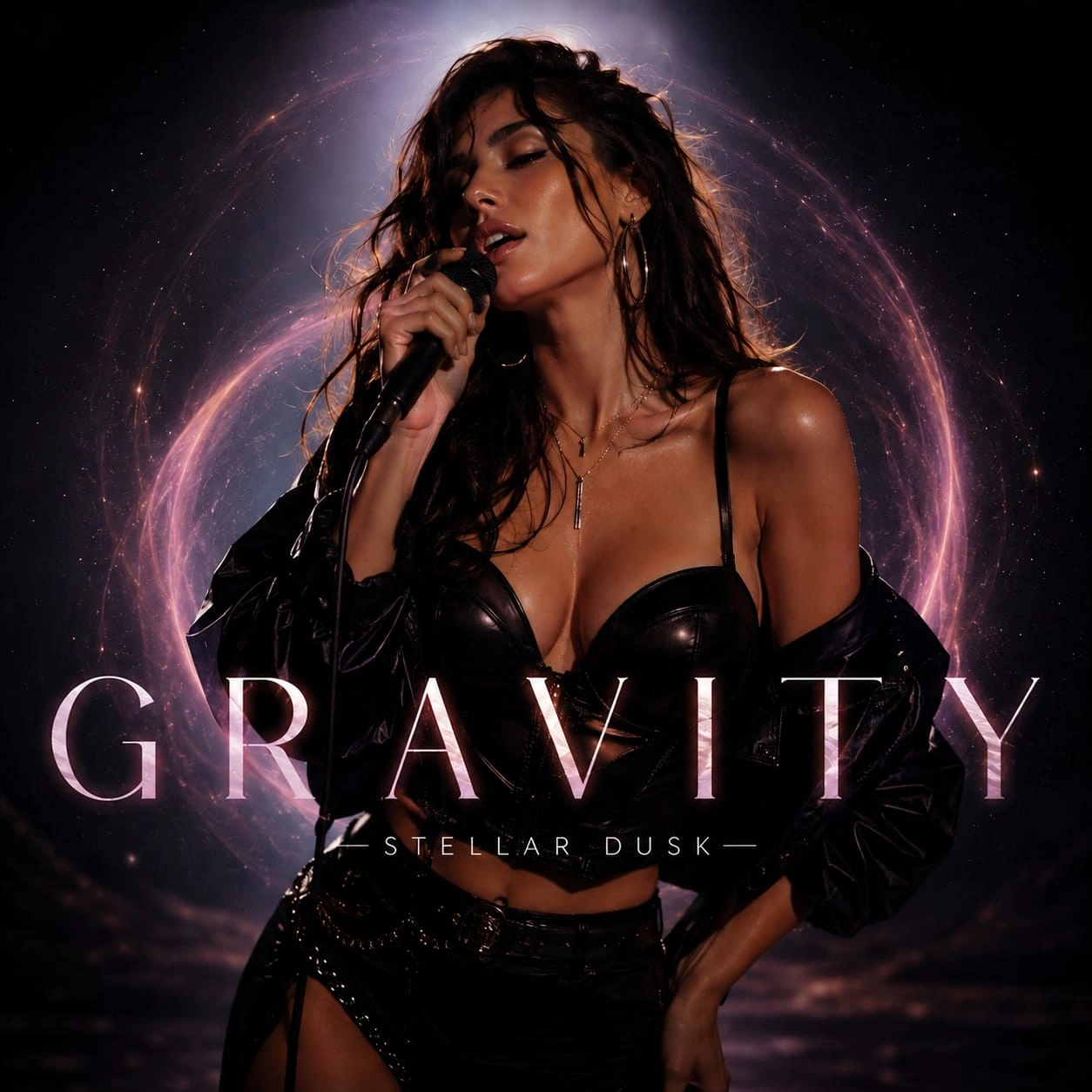
Stellar Dusk Gravity Puts Its Midnight Hook Up Front and Lets the Chorus Arrive Early
Start with the chorus, because that is where the song’s design starts too. Chiaretto wanted a simple, memorable melody and a strong chorus that arrives early. Everything else in Gravity follows from that decision. The hook hangs on two words, midnight gravity, and the track reaches them quickly. As a result, nobody has to wait through a long intro.
Chiaretto chose the tempo just as deliberately. Gravity runs at 108 BPM, a relaxed dance pace. That leaves room for the vocal to stretch out while still keeping a floor moving. Paired with an early chorus, it also gives the song a pop shape that works on the first listen. For an independent single competing in a crowded streaming queue, that counts for a lot.
Then comes the question this desk always asks: which machine made it? AI-assisted tools generated the music and the vocals on Gravity. In fact, the project’s own presentation on Radio Solidarité names the generator as Brev.ai. Chiaretto describes an iterative process of generating, listening and refining. Every pass had to match the direction already set for the song. So the tool supplied the sounds, while every decision about what to keep came from a person.

The Lyric Behind Gravity Is an Attraction You Cannot Resist, Written Simply and Sung Softly
The title is the metaphor. Gravity is about an attraction that feels impossible to resist. Even when you know you should pull away from someone, something keeps drawing you back. For that reason, Chiaretto kept the words deliberately plain: simple, sensual and immediately understandable. The idea therefore lands on the first pass.
That plainness also suits the night-time setting the song lives in. The project describes the track’s world as nocturnal. In two words, midnight gravity holds the whole story. First come the late hours, then a pull that will not let go, and finally a chorus that admits it.
The vocal direction follows the same logic. Chiaretto asked for a soft, sensual female voice, then stacked it into layered harmonies and doubled vocals. Reverb and echoes keep the sound airy and let it evolve as the track moves. Studios have doubled lead vocals for decades because it thickens a line without simply making it louder. On Gravity, the same trick gives a generated voice the blurred edge of a performance sung more than once.

A 108 BPM Pulse, Lush 80s Synth Pads and Doubled Vocals Give Stellar Dusk Gravity Its Shape
Underneath the voice, Chiaretto wanted a modern synth-pop track with subtle 80s influences. Lush synth pads carry the harmony. Meanwhile, the melody stays simple enough to hum. A steady, danceable beat holds everything together for just over four minutes. Nothing in the mix competes with the hook; instead, every part is there to frame it.
Those pads have travelled a long way to reach a 2026 single. The wide, warm synth pad was a signature of 80s synth-pop. French electronic acts kept it alive for decades afterwards. Air built Moon Safari in 1998 from soft vocals and vocoder lines over warm Moog and Korg keyboards. Similarly, M83 leaned openly on 80s synth-pop for Hurry Up, We’re Dreaming in 2011, the album that produced Midnight City. Gravity now takes that pad-heavy warmth and runs it through a generative process. That is where the sound has gone next.
On the dance side, however, the closest reference is Robyn. Robyn’s Body Talk records showed in 2010 how a tender vocal line could ride a hard electropop beat. Dancing On My Own remains the best-known example. Consequently, fans of that balance will find Gravity easy to settle into. So will anyone who follows female-fronted electropop and synth-pop more widely.
From the ElectroPop.News curator team: “The title works on two levels. First, the lyric describes a pull back towards someone. The 108 BPM beat also does the same job on the dancefloor. It draws listeners back to the chorus whenever the pads start to drift.”
Where to Stream Stellar Dusk Gravity and Follow the Paris Electropop Project’s Next Releases
Gravity has been out since 16 July 2026. It joins a Stellar Dusk catalogue that moves between English and French titles. Same Pulse and My Beautiful Poison sit on one side, while Trop vite and Compte à rebours sit on the other. The English-language hook also gives Gravity an easy route to listeners in the UK, the US, Germany, Canada and France.
Follow Stellar Dusk on Spotify and on the project’s YouTube channel, where new audio and visual releases land.













About The Author

 Why Boulevard of Broken Dreams Keeps Coming Back, and How Got Dibs Rebuilt It on Piano
 Elsa Eva Writes the Eerie Chorus in Fragments, and How to Hear It
 The Mild West: Space Cowboy Newt’s Tiny Synth Sound and Where It Went
 Why Big Room Keeps Coming Back on Twilight by JOYFIRE and Christine Elise
 Montréal Electro-Funk Groove Writing on BOO THANG! By ALÖW, and How to Hear It
 VEM NA LUA Gives Corb Schemitz One Phonk Track at Five Different Speeds