
Why the Chillwave Era Keeps Coming Back on Dreams of Yesterday by Formoe
Why the Chillwave Era Keeps Coming Back on Dreams of Yesterday by Formoe
Formoe, Producer Alf Emil Eik and Singer June Baltzersen Turn Memory Into Slow Synth-Pop
Dreams of Yesterday takes its production from the chillwave playbook: atmospheric synths, a slow pulse and space around a voice. Norwegian artist Formoe released Dreams of Yesterday as a debut single on 6 April 2023. Since then, its blend of chillwave, dark wave and dark pop has kept finding new listeners across Europe.
Formoe’s Dreams of Yesterday is in the playlist below, and past features are listed on the Formoe profile. The single reached ElectroPop.News through PopHits.Co Music Charts, which verifies independent artists and places their releases across its network of music news sites. Listen to the radio edit first, then read on for how the chillwave sound was put together.

Soft Synths and a Slow Chillwave Pulse Give Dreams of Yesterday by Formoe Its Hook
Chillwave emerged in the late 2000s as a microgenre built on memory and nostalgia. It borrowed the dreamy, faded pop of the late 1970s and early 1980s. Along the way, it leaned on vintage synthesizers, mellow vocals, effects processing and slow to moderate tempos. A song called Dreams of Yesterday fits that frame by its title alone. In fact, the hook is exactly that sense of looking back.
The production gives the idea its shape. Alf Emil Eik, a veteran Norwegian producer whose credits include a-ha and Secret Garden, produced the single with Roar Farstad. Farstad, an award-winning producer from Kristiansand, also mixed it. Eik runs Cross Studio in the same city, and Bjørn Erik Kvestad Pedersen handled the mastering.
Critics have described the result in concrete terms. For example, Good Music Radar heard atmospheric synths, hypnotic bass lines and echoing beats around the vocal. Meanwhile, Songscope picked out swelling strings and keys.
That arrangement explains the appeal. First, the synths set the mood. Then the bass keeps the song moving at a slow pace. Finally, the echoes give the vocal a sense of distance, as if the memory is just out of reach.

A Lyric by Terje Formoe and the Voice of June Baltzersen Carry a Story of Loss
The words come from Terje Formoe, the artist’s father. The Norwegian singer, songwriter, actor, playwright and author is best known for creating Kaptein Sabeltann. That pirate character first appeared in a children’s summer musical at Kristiansand Dyrepark in 1990. Here, however, the writing is far from a children’s stage. According to En Forlaget, the publishing company behind the single, the song is a collaboration. Marius Formoe, who records as Formoe, wrote the melody and arranged it, while Terje Formoe wrote the lyric.
As a result, Kristiansand runs through the whole project. Eik’s studio is there, Farstad comes from there, and Kaptein Sabeltann began at the city’s Dyrepark.
The song deals with the time after losing someone you love, and with the longing that stays. HailTunes called it a gentle and emotional pop song about missing someone who has died.
On vocals, Formoe brought in June Baltzersen, an actress and singer. Songscope wrote that Baltzersen underlines the intensity of the emotions in Terje Formoe’s words. The casting suits the lyric, and the slow tempo gives each line room to land.

A Radio Edit, an Award-Winning Video and European Airplay Shape the Structure of the Single
Radio shaped the structure. The version on streaming services is the radio edit, which runs for three minutes and 54 seconds. Within that length, the arrangement stays steady and the melody stays in front.
The results back that up. German radio A-listed Dreams of Yesterday for more than a month, and one station played it more than 100 times. It also received frequent airplay in France. In total, Formoe’s music has now reached radio in roughly 40 countries.
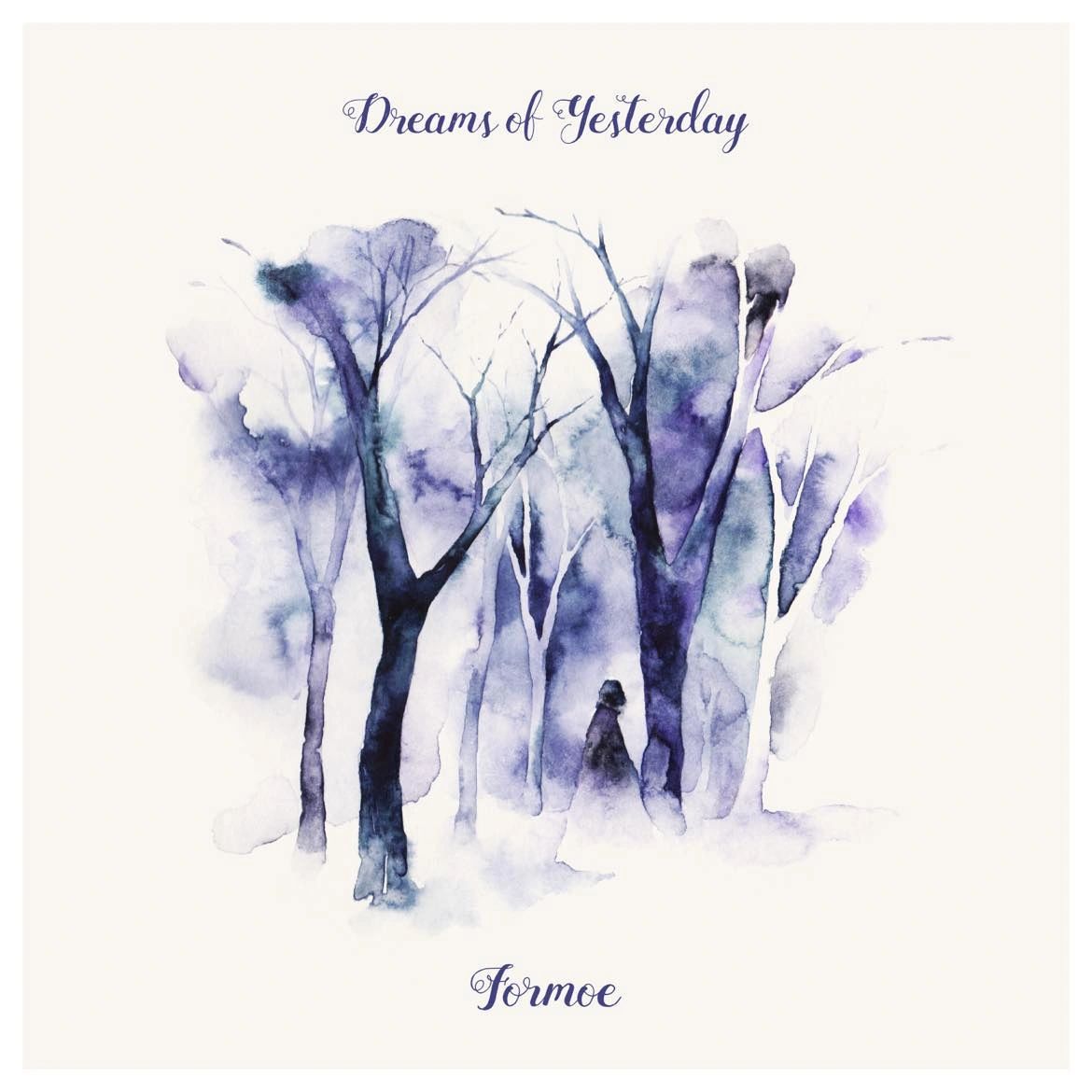
The animated music video added another layer of recognition. It won Best Music Video and Best Animation at the European Cinematography Awards. Even the cover art carries the handmade feel of the project, because Sten E. Moe designed it from a watercolour painting by Ksenya Knysh.
Two artists from the original chillwave wave help place the single. Washed Out released Feel It All Around in 2009, and critics still point to that song as the template for the genre. Toro y Moi, another pioneer of the style, has since carried those dreamlike textures into a wide range of styles. Similarly, Dreams of Yesterday takes that retro palette and gives it the polish of a Norwegian studio production.
ElectroPop.News’s curator team:
“Dreams of Yesterday shows why the chillwave sound keeps returning. The synths and slow pulse carry the memory, and June Baltzersen’s vocal makes it feel personal rather than vague.”
Where to Hear Dreams of Yesterday by Formoe and Follow the Artist Across Every Platform
This one is for listeners who like their synth-pop slow, moody and melodic. It also suits indie pop and adult contemporary fans who come for a strong melody, and anyone drawn to songs about memory and loss. Listen on headphones to catch the echoes around the vocal, then watch the award-winning video.
Stream Dreams of Yesterday on Spotify and Apple Music.
Follow Formoe across platforms: Spotify, Apple Music, YouTube, Instagram, Facebook and TikTok.





About The Author

 The Two-Voice Weave on Hidden People by Musspell, and How to Hear It
  The Coldwave Synth Sound and Where It Went on the STRIDULUM Album Paradigm
  A Madonna Sample Runs Through Troye Sivan’s Party
  The Marimba Sound and Where It Went: Zelipercussion Carries It Into Naja
  The Dark Electro Sound of Mr. StarZ and Where It Went After Electric Found
  Dobi Dobi: Alterkix Puts a Robot Voice on Analog Synths, and How to Hear It
  Why the Chillwave Era Keeps Coming Back on Dreams of Yesterday by Formoe