Kavinsky Has Died and Left Synthwave Two Albums
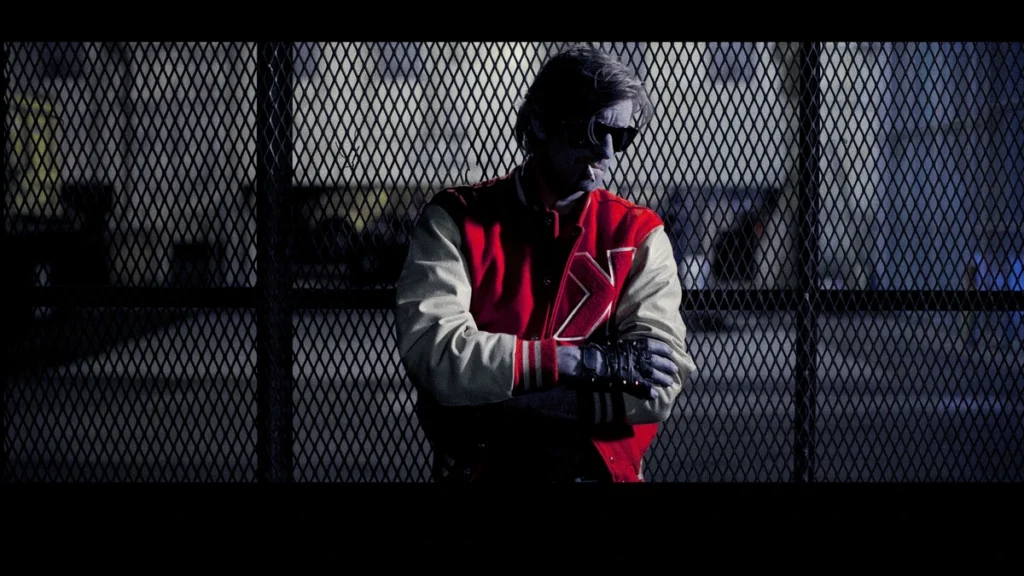
Vincent Belorgey was found dead at his apartment in Paris on the evening of 28 July 2026. He was fifty. The Paris prosecutor’s office opened an investigation, and first responders reported no suspicious elements at the scene.
He recorded as Kavinsky, and for twenty years he made music about one invented man: a young driver who crashed a Ferrari Testarossa in the 1980s and came back in 2006 as a zombie. Everything else, including a genre, grew out of that.
An Actor First
He was born in Seine-Saint-Denis in 1975 and initially pursued acting, appearing in Quentin Dupieux’s Nonfilm in 2001 and later in Aaltra, Atomik Circus, Ultranova and Dupieux’s Steak. The move into music came through the same circle: he started making tracks on an old Apple computer that Dupieux gave him, and the first release, the Teddy Boy EP in December 2005 on Record Makers, was made entirely on a Yamaha DX7.
The instrument matters. The DX7 is the FM synthesiser that defined the sound of mid-eighties commercial recording, and by 2006 it was thoroughly unfashionable. Choosing it was not nostalgia for its own sake but a decision to work inside a specific and slightly embarrassing sonic period, which is the founding move of everything later called synthwave.
He arrived at the height of French electro and toured with Justice, SebastiAn and Daft Punk, including Daft Punk’s Nevereverland run in Australia. That placed him alongside the most commercially dominant electronic acts France had produced, while doing something considerably stranger than any of them.
The Character Came First
The zombie was not marketing attached to finished music. It was the premise the music was written to serve, and it dictated the palette: sixteen-bit game soundtracks, eighties film scores and luxury cars, rendered with the equipment those things were originally made on.
Belorgey explained Nightcall itself in exactly those terms, describing it as his character’s unrequited romance with an ex-girlfriend who had moved on. That is why the record works. The narrator is dead, the object of the song is not, and the song is sung from the wrong side of that gap.
He was also direct about why he needed a character at all, saying it let him make music and tell a story rather than simply put his own face on a sleeve. Coming from a former actor that reads less like evasion than like a choice of medium. The zombie had red eyes and blue skin, crashed in 1986, and returned exactly twenty years later, which is why one of the early EPs is simply called 1986.
The releases that followed kept the timeline going rather than restating it. 1986 arrived in 2007, Blazer on Fool’s Gold in 2008, then the Nightcall EP in March 2010 and an anniversary edition the year after. Each one added to a story instead of relaunching a brand, which is a discipline very few concept artists sustain past the first record.
Nightcall
It came out in 2010, co-produced with Guy-Manuel de Homem-Christo of Daft Punk, with the lead vocal by Lovefoxxx of CSS answering Belorgey’s pitched-down verse. A year later Nicolas Winding Refn used it over the opening of Drive, with Ryan Gosling, and it stopped being a French electro single.
It has since passed a billion combined streams across Spotify and YouTube and is routinely listed among the defining electronic records of the early 2010s. In 2024 it was performed at a closing ceremony of the Paris Games, in a version featuring Phoenix and Angèle, and set the record for the highest number of Shazam queries in a single day.
That last statistic is a strange kind of tribute. A song built around a fictional dead driver, released fourteen years earlier, produced the largest single-day spike of people asking a phone what they were listening to.
Two Albums
OutRun arrived in 2013, named for the Sega arcade racer, and reached number two in France. It brought in SebastiAn, de Homem-Christo, Lovefoxxx and Havoc of Mobb Deep, which is a guest list that only makes sense if you accept the premise, since the album is a concept record narrated by a corpse in a sports car.
The album also produced Odd Look with SebastiAn, later reworked in a version featuring The Weeknd, which is the direct line explaining why that particular tribute arrived this month. The SebastiAn remix of Testarossa Autodrive had already reached a different audience entirely, appearing in Grand Theft Auto IV and Gran Turismo 5 Prologue.
Then nothing for years. He returned in November 2021 with Renegade, featuring Cautious Clay and produced with Gaspard Augé of Justice and Victor Le Masne, then Zenith in March 2022 with Prudence and Morgan Phalen. Reborn arrived that same month on Record Makers, reaching thirteen in France and three on the UK dance chart, noirish and unhurried, the title doing the obvious work. Two studio albums in a career of two decades is an extraordinarily small output for a producer of that reach, and it is central to how he is now being assessed.
He never diluted the idea by repeating it annually. The scarcity is what kept the character intact, and it is the reverse of the strategy of nearly everyone who followed him into the genre.
What Came After Him
Synthwave now supports a substantial ecosystem of producers, labels and film composers, most of whom are working from a template he assembled between 2006 and 2013. The retro-futurist palette, the cinematic framing, the car, the neon, the invented eighties that never existed: all of it traces back through Nightcall.
Its most successful descendants have taken the form somewhere darker and heavier, as with Carpenter Brut closing an eight-year trilogy, which is a body of work several times the size of Belorgey’s built on foundations he laid. That is the ordinary relationship between an originator and a scene, and it does not diminish either.
The Tributes
They arrived from an unusually wide range. The French culture minister, Catherine Pégard, called him one of the country’s most singular voices. President Emmanuel Macron described him as forever a source of French pride. The Weeknd called the news heartbreaking and named him an inspiration. David Guetta called him a true icon of French electronic music.
A head of state and a stadium pop star responding to the death of a producer who released two albums is a measure of how far one song travelled, and of how completely the sound became national property in France.
He Was Still Working
He performed sporadically in his last years rather than touring hard, appearing at French festivals in the summer of 2025 and playing a show in Switzerland in April. He had been a regular at Coachella and Lollapalooza in earlier years.
A date in Los Angeles was scheduled for October 2026, alongside The Blaze and Claude VonStroke. The unfinished calendar is the detail that lands hardest, because it describes an artist who was not in retreat.
The work he leaves is small enough to hear in an afternoon and large enough that a whole genre is still working through it. He wrote a character who was killed in the eighties and kept driving, and that character has now outlived him, which is roughly the joke the records were always making.
About The Author

 The Hip-Hop Dance-Pop Sound and Where It Went on Hold Me Close Now! By Gloria May Byron
  Why Chillwave Keeps Coming Back: Goodbye Gravity by Attaboy
  Why Synth-Pop Keeps Coming Back, as Shoshan Dunamis Shows on Have a Sense
  Bright Arpeggios Under a Heavy Heart, and How to Hear Them on LNNY’s Gehen Rafatape Remix
  Summer Shame: F. Scott’s Unearthly Opening Notes and Where They Went
  Four Versions of One Hook on What I Should See by Peter Agyagos, and How to Hear It