
Shygirl Made a Love Song That Sounds Like a Chase Scene
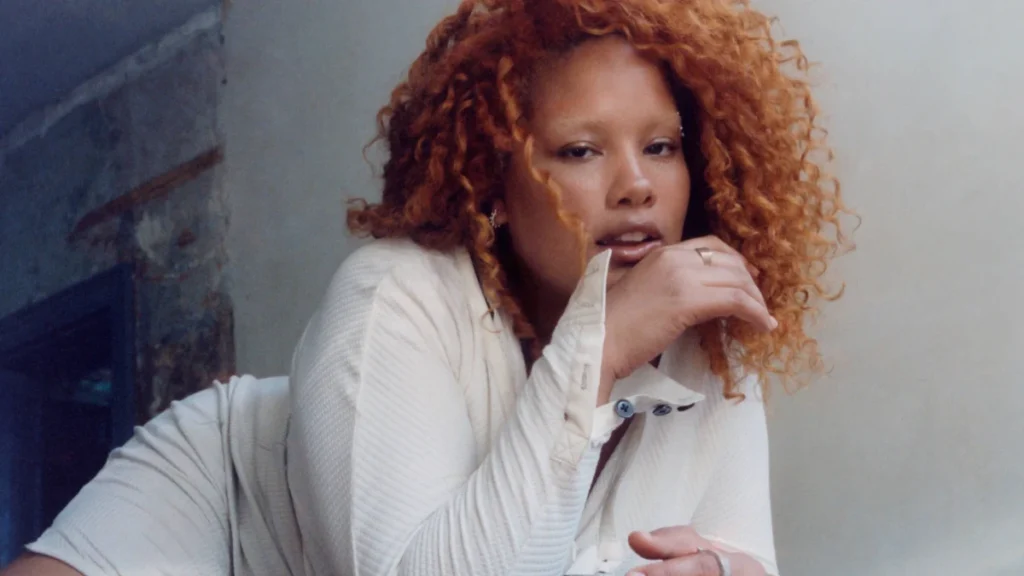
The track opens with something ethereal enough to make you check you have the right artist. Soft, floating notes; a first verse delivered almost flatly, more spoken than sung. Then the drums arrive and the record becomes an entirely different object.
That switch is the whole design of Alyse, which Shygirl released on 20 August as her first music of 2026. She co-wrote and co-produced it with Karma Kid and JD Reid, and it is being positioned as the start of a new era rather than a one-off single.
The Reference Is Explicit, and She Named It Herself
Artists usually leave their influences for other people to identify. Shygirl skipped that step. Speaking on BBC Radio, she traced the arrangement to a specific record and a specific age.
“For me, all the music I used to listen to and what I’m listening to now, I just felt like I was being honest with my taste,” she said. “When you’re younger and I heard like ‘Firestarter’ or something and I was like, ‘Wow, is that what music can do,’ that’s kinda what I wanted to feel in the studio for this stuff and I think it’s the best song to reintroduce people to where I’m at.”
She has also described the finished thing as having “that action movie propulsion going on”, which is a more useful description than most genre labels. Propulsion is a mix decision as much as a writing one. It comes from drums placed forward, a bassline given room in the low mids rather than tucked underneath, and very little reverb on the transients so nothing smears.
The Tension Is Deliberate
What makes the record interesting is not the drums on their own. It is that the words on top of them are tender.
“And it was funny because all the lyrics are about me being in love and no matter how far the distance, no matter where we are, same sky, looking at the same stars and whatnot,” she said, “but then you got this big, bold bassline in the background, drums happening and that felt very The Prodigy.”
The lyric bears that out. “The same sky we see / The same air we breathe / You could never be too far from me,” runs the first verse, and the chorus is plainer still: “Spread my arms wide / Fall into yours / Sink into love / Forever.”
Pairing a devotional lyric with an aggressive arrangement is a real compositional choice rather than an accident of taste. Set those words over piano and strings and you get a ballad, which says the feeling is soft. Set them over drums that sound like something is about to happen and you get a different claim: that wanting someone at a distance is not a gentle state at all. The arrangement is doing the emotional argument, and the lyric is only supplying the subject.
What Is Actually in the Mix
Descriptions of the track have not converged, which is usually a sign that a record is genuinely hard to place. One reading hears piano and heavy guitar riffs, and a blend of rock, metal and dark electronic elements. Another hears the drums as pure late-nineties big beat and the video as its natural extension.
Both are hearing the same thing from different ends. Big beat was always partly a rock production style: compressed breakbeats, distorted low end, guitar treated as a texture rather than as a lead instrument. A track built from that palette will read as rock to a listener who arrives from pop, and as electronic to one who arrives from guitars.
The construction is also unusually visible. There is an intro that establishes one register, a hard transition, and then a sustained second state. Most contemporary pop hides its seams by easing between sections. This one leaves the join exposed, which is why the opening reads as a misdirection rather than a build.
The Bridge Was an Accident of Who Was in the Room
The male voice in the bridge belongs to George Smale, Shygirl’s partner. He was in the studio during the early stages of the song, and she brought him in to sing the part.
That detail is worth more than it first appears. A love song that happens to contain the voice of the person it concerns collapses the distance between the writing and the subject, and it did so because of proximity rather than concept. The part exists because he was there.
Colleen, who released Libres antes del final earlier this year, is also credited on the composition. Karma Kid has worked with Shygirl repeatedly; JD Reid is the less frequent collaborator of the two, and the pairing appears to be what pushed the record outward.
The Video Argues the Opposite Case
Shygirl co-directed the video with Francesco Loy Bell and Oliver Bell, working from a story she wrote with Smale. It plays as a late-nineties British crime film, and its narrative concerns a couple and an act of betrayal.
So the video contradicts the lyric on purpose. The song describes constancy across distance; the film shows the opposite. Given that she wrote both, the contradiction is the point rather than an oversight, and it fits a record whose entire method is putting two incompatible things in the same frame and refusing to reconcile them.
A Year Spent Inside Other People’s Records
The gap before Alyse was not idle. Across 2026 she turned up on Charli XCX’s The Moment and on Madonna’s Confessions II – The Film, and the year before that closed with Club Shy Room 2, a release built substantially around other names.
Guest appearances and lead singles are different instruments and they are frequently confused. A feature is a controlled demonstration: you arrive on somebody else’s arrangement, at somebody else’s tempo, in a section somebody else has shaped, and the job is to be memorable inside a fixed frame. It is a skill, and it is one Shygirl has been unusually good at, because the flat, clipped delivery she uses cuts through a busy mix without needing to be loud, the same trick deadpan speech has always pulled on a club record.
What a feature cannot do is establish direction. Nobody hears a guest verse and concludes anything about where that artist is going next, because the surrounding record was not theirs to point anywhere. The tempo, the key, the palette and the running order were all decided before the vocalist arrived.
Two years of that leaves a specific problem. The audience knows the voice extremely well and knows almost nothing about the current intention behind it. Familiarity accumulates while the picture of the artist goes out of date.
That is the gap Alyse is built to close, and it explains the size of the sonic swing. A subtle record would have been absorbed into the existing impression rather than replacing it. Something abrupt enough to make the first thirty seconds feel like a mistake is the only kind of release that resets an audience’s assumptions in one move, and the abruptness is engineered rather than incidental.
Why This Counts as a Reintroduction
Her own phrase was that this is “the best song to reintroduce people to where I’m at”. That word choice matters. A reintroduction implies the previous introduction has stopped being accurate.
The last full project was Club Shy Room 2 in 2025, and the year since has been spent inside other people’s work rather than her own. Alyse is the first thing in a while that has to stand as a statement about her rather than a contribution to someone else’s.
Choosing a track this abrupt for that job is a risk taken deliberately. The safe reintroduction would have been a club record, since that is the territory she is known for and the one where the audience is already assembled. A love song delivered at this volume is harder to file, and being hard to file is the most honest thing an artist can do at the start of an era she wants judged on its own terms.
About The Author

 The Hyperpop Synth Sound and Where Noah Tonin Took It on LOSE CONTROL
  SynRize Make You Feel: Human Lyrics, AI Production and How to Hear Both
  Vera Soledad y Sangre: Why Eighties Synthwave Keeps Coming Back to Montevideo
  PINLIGHT Over and Over: Why Scottish Synth-Pop Keeps Coming Back
  Shygirl Will Bring a Full Band to the Royal Albert Hall
  The Hip-Hop Dance-Pop Sound and Where It Went on Hold Me Close Now! By Gloria May Byron