
Hannah Diamond Made One of PC Music’s Last Albums
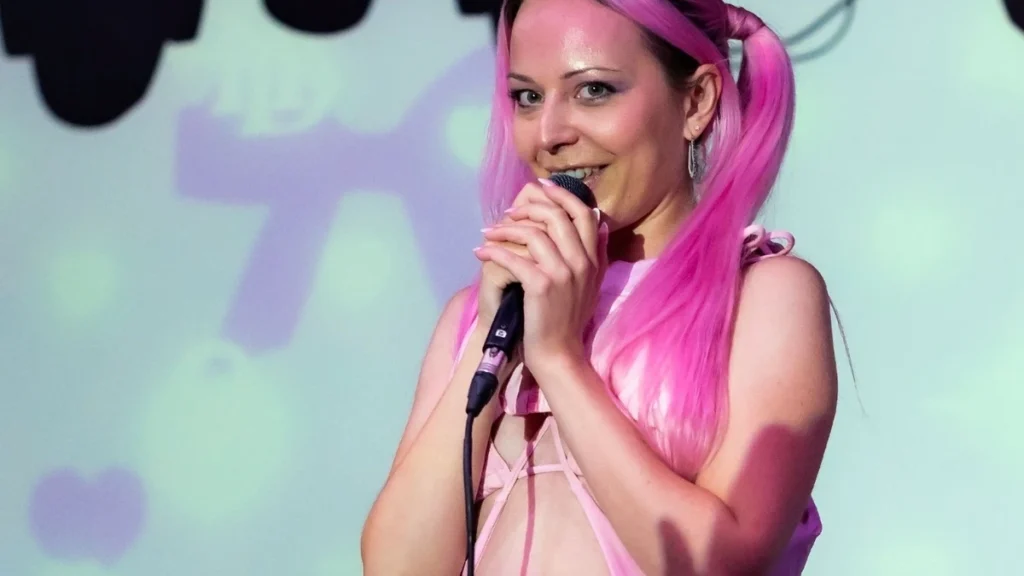
PC Music stopped releasing new music at the end of 2023. Perfect Picture came out on 6 October that year, which makes it one of the final albums issued by the label that assembled hyperpop and then handed it to everyone else.
Hannah Diamond had been on it since 2013, which is as close to the beginning as it is possible to be. Her second album is therefore both a personal record and an ending, and it is a considerably better record than that framing usually produces.
What the Album Is About
She has described it as concerning the space between being a person and an image: the difference between the self her family and close friends know and what she has called her newfound pop-star self. Beyond that, she says, it is about her relationship with herself, and her relationship to girlhood and girlishness.
That is a more precise brief than most pop albums operate under, and she has contrasted the position she wrote from with her previous record, which was made during a difficult breakup. This one, she says, comes from a much more empowered place.
She Takes the Photographs Too
Diamond is a working photographer and visual artist as well as a singer, and she does not treat these as separate careers. Her formulation is direct: a pop star project is a kind of self-portrait, and the photography and the music are just different ways of expressing the same thing, feeding into and inspiring each other.
This is why the image question is not a theme she picked up. An artist who spends her working life constructing photographs of other people, and then constructs an image of herself to sing from, is describing an occupational condition rather than a metaphor.
Produced by a Scritti Politti Veteran
David Gamson and Guy Sigsworth produced it. Diamond met Gamson in 2016 at PC Music’s Pop City event in Los Angeles, and the pairing makes a specific kind of sense: Gamson built his reputation on meticulous, glossy studio pop in the 1980s, which is precisely the surface hyperpop keeps reaching for.
Twelve tracks run forty minutes and thirty-seven seconds. The title track opens, followed by Affirmations, Poster Girl, Want You to Know, Impossible, Flashback, No FX, Lip Sync, Staring at the Ceiling, Twisted, Divisible by Two and Unbreakable. The album also includes a reworked demo originally from the Kesha sessions of her first album era, a record Diamond has called one of her favourite pop albums ever.
Four Singles Over Nineteen Months
Staring at the Ceiling appeared in February 2022, a full twenty months before the album. Affirmations followed in July 2023, the title track in August and Poster Girl in September.
That is a very long lead, and it suggests a record that took its time rather than one held back for a campaign. The vinyl arrived on 2 December, two months after the digital release, by which point the label putting it out had effectively announced it was winding down.
Reading the Track List
The titles are unusually legible for a record about image. No FX names a studio setting: the absence of processing, on an album whose defining sound is processing. Lip Sync is about performing something you are not producing. Poster Girl and Perfect Picture both describe a person converted into a flat surface.
Against those sit Affirmations, Impossible, Twisted and Unbreakable, which read as internal rather than external. The sequence alternates between the two registers almost throughout, which is a structural way of staging the same argument the album makes in its lyrics.
Divisible by Two, at eleven, is the odd one out and the most suggestive title on the record. An artist describing herself as split between a person and an image has picked a phrase from arithmetic to say it, which is exactly the kind of cool, slightly synthetic move the PC Music house style was built on.
The Reviews
Metacritic settled at 78. The Line of Best Fit gave nine out of ten and said it cemented her status as a cult icon. Clash gave eight, Pitchfork 7.8, and DIY and Slant four stars each. The Guardian placed it forty-sixth among the albums of 2023.
DIY’s summary is the most useful, calling it the pinnacle of contemporary hyperpop while noting that it steers away from the style’s once-abrasive nature toward a well-rounded, rebooted version. Pitchfork heard something similar in the production, describing a blurrier resolution in which pitch-shifted vocals glitch in and out of static.
Both are describing the same shift. Early PC Music records were deliberately uncomfortable, built on brightness pushed past the point of pleasure. Perfect Picture keeps the palette and removes the aggression, which is what a style does when it stops needing to announce itself.
What Happens to a Label’s Artists
Diamond’s response to the label winding down was to point out that PC Music was never only a label. She describes it as three things at once: a distribution operation, an artist community and the group of artists themselves, and says the community will shift and grow with them.
That is not simply loyal phrasing. PC Music’s actual contribution was a shared production language and a roster who all worked on each other’s records, and none of that requires a company to keep existing. The catalogue stops; the method does not. Labels built around a scene rather than a contract tend to end this way, with the paperwork closing long after the useful part has been distributed.
The evidence is what happened to the sound. Hyperpop is now the default reference for a generation of producers who have never released anything on the label, and its founder’s production fingerprints are on records that sell in numbers PC Music never approached.
Two Albums in a Decade
Reflections, her debut, appeared in November 2019, six years after she started releasing singles. Perfect Picture followed four years after that. Two albums in a ten-year recording career is a very small output for someone this central to a movement.
Part of that is the photography, which is a second full-time practice. Part of it is that her earliest records were singles designed to work as standalone objects rather than as album material, which was the house style: PC Music released tracks that behaved like adverts for songs that did not exist.
The slowness now reads as an advantage. Where underscores wrote a whole album about the exhaustion of being permanently visible, Diamond has arrived at the same subject by working at a pace that let her think about it. Both records are about image. Only one of them was made by someone who takes pictures for a living.
The closing of the label also settles a long-running argument about what PC Music was. For a decade it was described, often dismissively, as a conceptual project or an elaborate joke about commercial pop. Ten years of records and a roster who kept working after the company stopped is a fairly complete answer to that, and Perfect Picture is a good place to see why: nothing on it is ironic, and the surfaces that once read as satire are simply how this music sounds now.
About The Author

 The Hip-Hop Dance-Pop Sound and Where It Went on Hold Me Close Now! By Gloria May Byron
  Why Chillwave Keeps Coming Back: Goodbye Gravity by Attaboy
  Why Synth-Pop Keeps Coming Back, as Shoshan Dunamis Shows on Have a Sense
  Bright Arpeggios Under a Heavy Heart, and How to Hear Them on LNNY’s Gehen Rafatape Remix
  Summer Shame: F. Scott’s Unearthly Opening Notes and Where They Went
  Four Versions of One Hook on What I Should See by Peter Agyagos, and How to Hear It