
Robyn Waited Eight Years and Came Back With Twenty-Nine Minutes
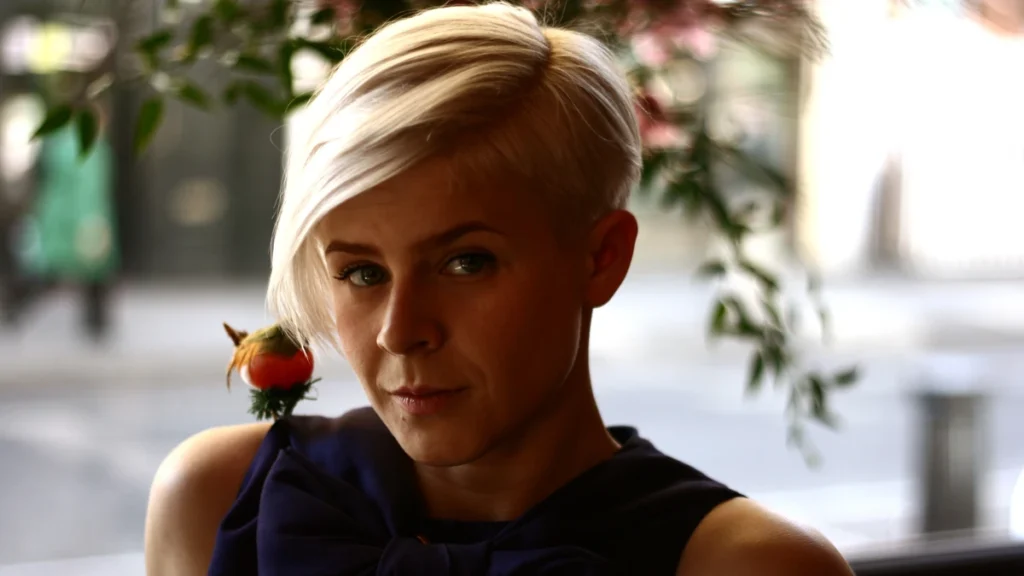
Eight years passed between Robyn’s last album and this one. The new one is twenty-nine minutes and twenty-seven seconds long.
Sexistential came out on 27 March through Konichiwa Records and Young. It is her ninth studio album and her first since Honey in 2018, and the ratio of wait to runtime is the first thing anybody noticed about it.
Twenty-Nine Minutes Is the Statement
Under half an hour is short by any measure and very short for a comeback. The convention after a long absence is the opposite: a long record, because the artist has years of material and the audience is presumed to want proof the time was used.
Robyn has form for ignoring that. The Body Talk project in 2010 went the other way entirely — three separate releases across a single year — so a catalogue that has already been stretched deliberately can be compressed deliberately too.
There is a practical logic to it as well. A twenty-nine-minute album can be listened to whole, in one sitting, without the listener deciding to commit an evening to it. For a record structured around a mood rather than a set of singles, that is not a small advantage.
It also removes the padding problem. Long albums after long gaps tend to include everything an artist wrote in the interim; a short one means somebody made decisions, and the decisions are audible in what is not there.
She Went Back to the Body Talk Producer
The other structural choice was who to make it with. Robyn returned to the Swedish producer Klas Åhlund, and did so specifically to make the record sound reminiscent of the Body Talk trilogy.
That is an unusually direct statement of intent. Artists rarely say out loud that they want a new record to resemble an old one, because it invites the obvious accusation. Saying it in advance removes the accusation’s force — you cannot catch somebody out doing what they announced.
Åhlund is not the only name on it. The credits also list Elvira Anderfjärd, Jonathan Bates, Oscar Holter, Joseph Mount and Robyn herself, which is a wider production team than the intent suggests.
Reviewing it for Our Culture, Konstantinos Pappis placed Åhlund among her “early collaborators” and noted that her music “still prioritizes the pleasure principle” while “defiantly eschewing the trappings of a ‘maturing’ pop star”. He quoted her telling Tinashe: “I’m never inspired by pain.”
That line is a useful key to the whole project. A returning pop artist in her forties is usually expected to make a record about difficulty, and declining that expectation is a harder position to hold than it sounds.
A Title That Started as a Joke
The album’s name is a compound of sex and existential, and it began as an in-joke before Robyn concluded it actually described what she was making.
Her own gloss widens it past the obvious reading: it “doesn’t even have to be about sex, but it’s feeling sensual and attracted to things that I enjoy, and not letting anything take over that”. PinkNews described the title as capturing an idea of one’s existence being tied to sensuality.
The record’s stated subjects sit around that. It circles physicality, desire and dance, and it also lets listeners into her life as a new single mother — two territories that do not usually appear on the same album.
Pappis picked up the collision on the title track, where she asks “Do I have the consistency to persist and finish this ride?” — a line he reads as referring to the person growing inside her. The opener, “Really Real”, turns out to be a conversation with her own mother, who responds to a song about a relationship dissolving by suggesting she make a cup of tea and go to bed.
Robyn’s own description of the album is the most quoted thing about it: it feels “like a spaceship coming through the atmosphere at a really high speed and crash landing. That’s how I felt, like I’d had all these experiences searching too far out into space, and now I’m crashing back into myself”.
The Comeback Ran Through Times Square and Colbert
The return was staged carefully across four months. “Dopamine” arrived as the lead single on 12 November 2025, and she performed it a week later at a surprise show at the Fonda Theatre in Los Angeles — her first concert since 2019, hosted by Spotify and Acne Studios.
On 31 December she played Times Square for CNN’s New Year’s Eve broadcast. On 1 and 2 January she staged two nights at the Brooklyn Paramount billed as Robyn and Friends, with Dee Diggs, Olof Dreijer of the Knife and Kindness among the performers. Five days after that she played the title track on The Late Show with Stephen Colbert.
The shape of that run is worth reading. A surprise club show, a mainstream television spot watched by people who do not follow her, a curated night for the club audience, then a late-night booking — four different audiences addressed in four different registers inside seven weeks.
The singles followed the same logic. “Sexistential” and “Talk to Me” came as a double A-side on 7 January, and on 11 March she released a reworked version of “Blow My Mind”, a song she originally recorded in 2002.
Reworking a twenty-four-year-old track as the final single before a comeback album is a confident move. It invites the direct comparison most returning artists spend their campaigns avoiding.
What the Reviews Found
The reception was strong and remarkably consistent. The album holds a Metacritic score of 84, with four out of five from the Associated Press, DIY, the Financial Times, The Guardian, Our Culture, Rolling Stone and Slant, eight out of ten from Riff and seven out of ten from PopMatters.
A spread that tight is unusual. Most albums produce at least one outlier in either direction; a row of fours suggests critics broadly agreed on both what the record was trying to do and how well it did it.
Pappis opened his review with an exchange in which Kelly Lee Owens asked Robyn whether she expected to still be raving at ninety, as Björk once said she would. His conclusion was that the answer “remains the same at 46 as it would in as many years”.
That framing recurs across the coverage because it is the actual question the album poses. Pop has no settled model for what an artist of Robyn’s standing does in her forties, and the available templates — the reinvention, the standards record, the memoir album — all involve some concession she has declined to make.
Supporting Harry Styles in an Arena
The most revealing detail of the year is not on the record. In May, Robyn supported Harry Styles across ten concerts at the Johan Cruyff Arena in Amsterdam, part of his Together, Together tour.
A support slot is not the obvious next step for an artist with nine albums and a catalogue of songs other people cite as formative. Ten nights in one arena is a specific opportunity though — a very large audience, most of whom arrived for somebody else, encountered in a room rather than on a playlist.
For a short album released into a streaming market, that kind of exposure is worth more than an extended campaign. Our piece on why synth pop does well on playlists covers the format’s usual route to listeners, and a run of arena nights is the deliberate alternative to it.
Eight years, twenty-nine minutes, one producer she had used before and one arena residency belonging to somebody else. It is not how a comeback is normally assembled, which is broadly the point.
Sexistential is out now on Konichiwa Records and Young.
About The Author

 Four Versions of One Hook on What I Should See by Peter Agyagos, and How to Hear It
  The Suno Sound and Where It Went on To Pa Dentro, a Latin Pop Ode to the Buffet
  The Hook That Comes Back Three Times on twirl by honni, and How to Hear It
  The 80s Drum-Machine Sound and Where It Went on Feels Like Heaven by MΛDLY
  The Rave Piano Sound and Where It Went on Feel Alive by DJ Jon
  Why Nineties Trip-Hop Keeps Coming Back on True True Self by Transformuse